Display Comb 4

/ featured media, post meta, title, read more link and full content

My grandfather, Paul Bunnell, passed away last in February of last year. A few of his effects were passed on to me including this old pocket watch. The watch does not seem to work, but I have been told it is fixable. You can see details about this and other pocket watches on this site. It seems to have a cool history and I wish he told me how it came into his possession. The watch was model 1857 and estimated to be produced in 1859 or 1860. So about 160 years old. The total production of this particular watch was about 800 units. The movement contains 11 jewels, which is named after Royal E Robin who I discuss below. It is not considered to be “railroad grade“, which is a type of chronometers pocket watch that keep extremely accurate time despite changes in climate. In fact, there is a fantastic book about the development of the chronometer to solve the mariners problem of longitude in the book Longitude: The True Story of a Lone Genius Who Solved the Greatest Scientific Problem of His Time, which I read in 2015.

The American Waltham Watch Company was based in Waltham, Massachusetts and produced watches from 1852 to 1957. So this watch was definitely one of their earlier watches. Waltham is about 10 miles west of Boston. Of course the factory has been converted to lofts, but cool enough, the building still stands.  American Horologe Company, who went bankrupt and was sold at auction to Royal E Robin, merged with Waltham in 1857. Horologe was started by 3 men who wanted to make less expensive but still high quality watches by making interchangable parts. This was the same strategy employed by Henry Ford in 1903 to make a better automobile and his legacy needs no commentary. This watch was designed around the time of the merger and the movement was named after Royal E Robin, who was also the company’s treasurer until his death in 1902. At the time the watch sold for about $12, which was a pretty good sum. If you assume that $1 dollar was equal to one ounce of silver (because the US dollar used to be tied to gold and silver), then this would be about a $300 watch. That company went through some hard times as the Civil War broke out in 1860. Interestingly Abraham Lincoln owned a similar watch made by Waltham Watch Company of the same size and number of movements that was made in 1863, just 3 years after the one I have. You can see a more complete history here.

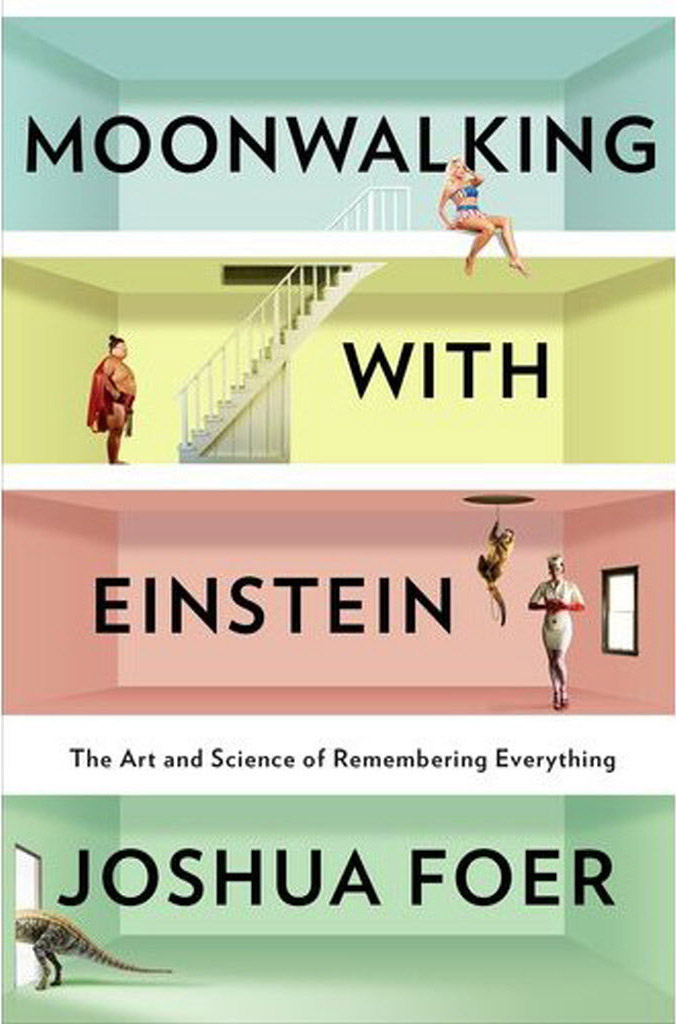
I just finished the book Moonwalking With Einstein – The Art And Science of Remembering Everything by Joshua Foer. I enjoyed the book, but would only give it 3 out of 5 stars. Unlike other non-fiction books like The Code Book, I felt this book did little to actually show you how to do a lot of the things discussed in the book, which was what I really wanted. This was really little more than a man talking about his experience with learning how to improve memory. I wanted to briefly describe the methods mentioned in the book but also comment on a few concepts that I thought particularly interesting.

Methods

The Method of Loci basically uses rooms you are familiar with and furniture in those rooms, and simply placing the items you want to memorize on these items of furniture. It is also called the Memory Palace Technique. A great video shows a two time US Memory Champ Ron White teaching a 6 year old this method to memorize all the US presidents in an hour. Ron White, the man from the linked video was also on Stan Lee’s Superhuman show on the History Channel. He also has a fantastic YouTube channel that teaches several memory techniques. What is interesting is that everyone that has learned memory systems like the Loci Method insist a person of average intelligence could do it in a few minutes of practice. In fact, Ed Cooke, who first taught the author the Loci Method, says he thought someone could win the US Memory Championship with just a few hours of practice a day. And that is exactly what the author does. Another application of this same technique was by Dr Chooi where he used is own body as the Loci to memorize a dictionary! “Dr. Yip Chooi, the effervescent Malaysian memory champ, used his own body parts as loci to help him memorize the entire 56,000-word, 1,774-page Oxford Chinese-English dictionary.”

Another method described is the Person Action Object or PAO method. This method is used to memorize numbers. For each digit from 0 to 9, one would have some person that is very memorable. And it is best not to use close friends or family. Santa Claus is a better option than your mom unless you want to picture your mom doing unspeakable acts in order to memorize a number. In addition to having 10 people for each digit, you would do the same for actions and objects. Lewd, silly, or gross is better than normal because they are more memorable. So maybe you choose Santa Clause to represent 7 because Christmas is on the 25th and 2 + 5 = 7. Farting (the action) is a 4 for no particular reason. And the object for 9 is your dream car: a cherry red 911 Porsche Turbo. So if you needed to memorize a phone number starting in 749, you would picture Santa Clause farting on a cherry red Porsche INSIDE your mailbox (or whatever is your #1 position in your Loci). Then perhaps Marvin the Martian is puking on your laptop right on your driveway (your second Loci position). And so on.

I am not sure the last method was really given a name, but ironically it was to remember names. But the idea was to have a picture associated with the most common names. If you sign up for an email, you can get a list of the top most 100 male and female names with great images for each from Ron White, the link is in the notes of this video. So if for the name Jason, Ron’s picture is a jaybird in the son. If you think my most memorable facial feature is my nose, then you would picture a jaybird pooping on my nose with the sun burning the poop or something. So the next time you see my, you would likely laugh remembering a jaybird pooping on my nose with the sun burning it but then instantly you would go….”Jason!”

Trade Off of Genius

One of the topics the author talks about extensively are cases where people have amazing memories with no method. Every single time, the person with the amazing memory has some issue with the brain. Sometimes it is head trauma or it may be a “defect” the person is born with. I have heard the basic idea before. You hear the same thing with people that can calculate big numbers. They usually also happen to have some corresponding deficiency. Rosie O’Donnell had a great line in a crappy movie called Beautiful Girls where she said, “You’re both fucking insane. You want to know what your problem is? MTV, Playboy, and Madison fucking Avenue. Yes. Let me explain something to you, ok? Girls with big tits have big asses. Girls with little tits have little asses. That’s the way it goes. God doesn’t fuck around. He’s a fair guy. He gave the fatties big, beautiful tits and the skinnies little tiny niddlers. It’s not my rule. If you don’t like it, call him.” Apparently intelligence works the same way. Einstein probably didn’t understand simple social etiquette. Mozart probably couldn’t count without using his fingers. And that guy from high school that aced the SAT probably thought Moby Dick was about a big fish that got away. God’s doesn’t fuck around. He’s a fair guy.

Natural vs Learned

There was one person he interviewed multiple times. It was someone that claimed and had been diagnosed as a savant, but the author suspected had actually learned many memory methods. Ultimately he questions if it matters. Then he asks which is more impressive: if he was a savant or if he taught himself these techniques. I think learning those techniques is very impressive, but, obviously, lying about how it is done is wrong. I imagine the only reason people study savants is to try to understand if we can induce, recreate, or learn to improve memory in some way and someone that lies about how he accomplishes his memory feats is the fly in the ointment of research.

Memorizing the Bible

The book reminded me of a documentary called Koran by Heart where young students memorize the entire Koran by heart. That would be 77,439 words to the entire Koran. To put that in perspective, that would be very close to the 79,976 words in the Torah, or the first five books of the bible. Like the Koran, many Jews have memorized the Torah. From the book:

One of the last places where this tradition of recitation still survives is in the reading of the Torah, an ancient handwritten scroll that can take upward of a year to inscribe. The Torah is written without vowels or punctuation (although it does have spaces, an innovation that came to Hebrew before Greek), which means it’s extremely difficult to read. Though Jews are specifically commanded not to recite the Torah from memory, there’s no way to read a section of the Torah without having invested a lot of time familiarizing yourself with it, as any once bar-mitzvahed boy can tell you.

I like the idea of trying to memorize the Torah. It is clearly possible as many people have done it already. Foer cites 18th century Dutch poet Jan Luyken, “one book printed in the heart’s own wax / Is worth a thousand in the stacks.” Who doesn’t want to write the bible on the heart’s own wax?

Some books mentioned:

  • The Art of Memory – Frances Yates
  • Born on a Blue Day – Daniel Tammet – written by a “savant”
  • Rhetorica Ad Herennium – anonymous – one of the first books on memory written circa 86 BC.

A few years ago I saw a really interesting documentary on Netflix called Who Killed The Electric Car that discussed General Motor’s fully electric car called EV1, the fanatical owners that owned them, and how GM quickly forced the owners to return them. It is one of those stories that makes you shake your head in disbelief. The California Air Resource Board mandated in 1990s that the big car manufactures make an electric car or lose the right to continue selling gas cars in California. It is one of those mandates Texas hates. It is anti-business. It is a tree-hugging hippie move that only those wack-jobs in Cali would think up. But here’s the thing…GM made a 100% electric car. And it was so popular and the demand so high that only famous people could get them. But you couldn’t buy them. They only leased them. And decided to recall them. Why? Who the fuck knows, but most can guess that oil companies have somehow incentivized the big auto manufacturers to continue making gas cars.

Elon the billionaire gambler

My dad came to visit a few weeks ago and gave me the book Elon Musk. He is a fascinating guy. He sounds like a Howard Hughes if Howard had made his own fortune. Elon starts off with a home run at PayPal, which he personally pocketed $165 million. So that is a huge sum of money. But not Facebook money. Instead putting that in bonds and safe securities, he makes some more big bets. And he says some crazy stuff. Sometimes ridiculous. But he has some really interesting ideas. And some ideas that I think really, really need to happen. He starts making his own rockets. Then an electric car company. He has also talked about bullet trains. China has made a mag-lev train that goes 300 MPH. Elon’s Hyperloop train cruises at 600 MPH making it faster than a commercial airline. So Elon has some big aspirations, but I want to talk about the economics of electric cars and why I think Detroit and the old school gas car is dead standing. A lot of people have told me electric cars just won’t happen. They either don’t understand physics or finance or either.

Efficiency of electric

When I was young, I loved making things. It started with Legos. Then I started making model rockets. Then I started making remote controlled electric cars. The thing I found interesting about the electric cars was how fast they were. They accelerated much faster than their gas equivalent. I am not really a car guy, though. But I later became friends with a car guy. I mean he was a nut for cars like some guys are nuts for baseball. There is this interesting dilemma gas cars have. To go faster, you have to have a bigger engine. The bigger the engine, the slower you go. There’s the rub. There is a ratio that is often used to quantify a car’s efficiency that directly deals with this very thing: power to weight. This is key to understand why Tesla is such a threat to the current auto world. Just like the remote controlled cars I played with, the full sized electric cars are much more efficient. They aren’t dealing with the weight of a 6 or 8 cylinder engine. If you look at the fastest production cars by acceleration, you will notice that Tesla is #2 (WHAT!?!?) and just the engines of the gas cars on that list weight more than the entire Tesla car. Collectively the engines for those five cars average over 2,500 pounds, which is more than the ENTIRE Tesla Model S85D. The single biggest metric car geeks are looking for is acceleration. How fast can the car speed up from dead still? The Model S85D goes from 0 to 60 miles per hour in under 2.3 seconds. There are only five street legal cars made that accelerate faster than that and only one under $1 million. Keep in mind, those guys have been making cars a long time. The model S (which includes the insanely fast S85D) was their second line and came out two years after the conception of the company. The car is the only car to ever get a perfect 5 from Car and Driver. Tesla’s biggest problem is keeping up with demand, which is the kicker.

Finance and car volume

So to put that in production I created a table that show the top US car manufacturer, their current market cap as of today (Aug 3, 2016), and the number of cars they produced last year. Let me explain that quickly. Generally speaking market cap is the market value of a public company that is calculated by taking stock price times volume of stock. That is typically driven by many factors, but probably most importantly earnings. How much they net from revenue, in other words. So I am taking the current market value of these companies and dividing it by the volume that drives that value. Why not revenue? Because the price of electric cars versus gas cars is not really apples to apples. Electric cars get about 90 MPG equivalent. And there are no moving parts to replace. The cost of ownership is lower but the sale price does not reflect that. Revenue has two components: volume and rate. I am just taking the important one. That is giving me per car value, which is the market cap divided by the volume of cars. In other words, the value the market puts on these companies based on the volume they produced last year. And keep in mind, Tesla just announced plans to push that to 500,000 in two years.

Company volume market cap per car value
Tesla 55,000 $32,500,000,000 $590,909
General Motors 9,800,000 $45,080,000,000 $4,600
Ford 6,635,000 $46,170,000,000 $6,959
Toyota 10,150,000 $183,560,000,000 $18,085

Conclusion

I think there are a few things keeping people from buying electric cars. Mainly battery life or an electric car range. The other is charging stations. The later is becoming less and less of an issue for two reasons. One, many companies want to look edgy and/or green and one way to do that is to have an electric car charging station. I talked to someone building office space last week and he was super proud of the fact that they had an electric car charging station. Secondly, Tesla is building them. With regards to their batteries, they have made their technology public. Why? They want to invest in battery technology and want to be clear they will share. It is a genius strategy because if it pushes other car manufactures to do the same, they will not only increase total electric car production, they may get great research insight from other battery research being done worldwide. Here is the final point I want to make and what prompted me to write this. As I said, Tesla’s biggest problem is keeping up with demand. And you can see in the chart above, in terms of volume, they are not really even on the map. Today Elon Musk announced a new “Gigafactory”. This factory will increase their volume from their current 55,000 to 500,000 in 2018 and ultimately to 1,500,000. So if you take the market value per car and multiply it by their projected future volume…. even if you take one fifth of their per car value and multiply it by the 2018 volume goal, it makes them significantly more valuable than the other two US auto makers. In other words less than a 40% increase in their current stock price puts would put them over Ford or GM. With a projected ten fold increase in car production in a year an a half, that is very probable.

From time to time, there is an incredibly tragic accident where people are killed with guns and this always tends to lead to a gun control debate. I understand and agree with the sentiment. If we could save one life, wouldn’t giving up guns be worth it? Do we really need guns? So let’s legislate away gun violence! Thinking you can control deaths by gun control is as unrealistic as saying you can legislate away depression. Or legislate away violence. Or legislate away stupidity. I think when you consider gun deaths by segment, understanding the flaw in gun control becomes more clear.

Suicide

The biggest category of gun related deaths are currently suicide. 60% of gun related deaths are suicide related according to Wikipedia. In this Freakonomics podcast on suicide, they mention guns are the primary method of suicide among men. More than 50% is what I think they suggested. I think even if you could magically remove every gun from the planet overnight, you would not also eliminate suicide. Or even significantly reduce suicide. Those suicide victims would likely just use another method.

Accidents

It is heartbreaking that anyone would lose their life from a gun accidentally. Worse still is that the victims are usually children. Statistically, it is a small number to the point of being statistically insignificant. A more significant cause of accidental deaths is from automobiles. The solution was seat belts and car seats. Steven Levitt (the economist behind the Freakonomics book) gave a TED talk suggesting car seats are practically useless. Further, he suggested car seat manufacturers were lobbying to push for legislation for car seats, not unbiased research. Fatalities from automobiles and guns are roughly similar, unless you adjust for suicide. The difference is we have made an incredibly amount of legislation in an effort to curb accidental automobile related fatalities. If you have ever wondered why cars aren’t as cool as they were back in the day, automobile safety related regulations are the culprit. Rearview mirrors, blinking lights, break lights, break light placement, frame manufacturing and design, tire manufacturing and design, air bags, seat belts, audible indicators to indicate you should use a seat belt, breaks, and I am sure anyone in the car industry would be happy to add to this list ad nausea. They would also probably say in a hushed voice that they don’t do shit, either. Or at least, not enough to matter. I am sure these safety features lower auto related death rates, but I think there are many other factors that have a much, much greater impact. Drunk driving, texting while driving, distraction from other passengers, and weather conditions are a few obvious culprits.

Murder

I think when people hear “gun fatalities”, they immediately think of murder. And who doesn’t want to end murder. Problem #1: a lot of gun violence is being done by criminals who didn’t get guns through a legal channel anyway. Problem #2: killing people is easy. Just ask the ants. Ants can kill other ants! For that matter, ants can kill people! If an insect can kill without guns, people can probably figure it out as well. Problem #3: making guns is easy. I am pretty sure I could make a gun in an afternoon with a visit to Home Depot. I have never made gun powder from fertilizer, but there is probably a 5 minute YouTube video that shows you how to do it. A gun is basically a pipe with one end capped, a combustive agent, and some projectile.

Trying to lower deaths is noble. It is something I can get behind. And if guns were just used for hunting, I would be the first to get behind gun control. But that is not why it is #2 in the constitution. It is also telling how many police and military people think guns are a good thing. It is counter-intuitive for sure. Gun control is not going to stop suicide. And adjusted for suicide, gun fatalities are not nearly as significant as auto related deaths. If we really want to lower deaths, our time is better spent by building high speed rails. Or taking cell phones away from drivers. You may prevent some deaths with gun control, but it would be offset by an increase in violent crime. In the last few weeks I have heard of a young man getting accidentally shot by his father. But far more common is an intruder getting shot by a gun owning home owner. And I know in today’s world, the idea of revolting against our government sounds crazy. But think how crazy some of our nations leaders have sounded (or sound). Those that forget history are doomed to repeat it. Because if you give up one right, you might end up all of them. And here is my post-Independence-day-thought: I love the idea that this country was founded by farmers that stood up to the greatest military might of the time. They couldn’t have done that without guns.

Today wrapped up Dallas Startup Week. I went to the Game Day, which was the final session of the Video Game track. There were several really cool games and gaming technology being demoed and I was surprised how many video and board games are being developed in Dallas. There was one in particular that caught my attention: Scrapped. Scrapped is a game that was developed as part of a project in the SMU Guildhall program.

So instead of reading my description of the game, you should download and play the game for free. You can complete the game in one sitting. You play the robot C23, which is built in a factory but then is Scrapped because it does not meet some criteria. Once scrapped, you learn that there is a paradise of free robots and your job now is to find your way to that paradise. In other words, being scrapped turns out to be a great thing. Instead of being a robot slave doing some mundane task indefinitely, you are now going to join others and live in paradise. You don’t kill anyone or anything. You don’t try to beat others. You are just using your robot powers to overcome obstacles and get to the goal.

The game is beautiful. It is easy to understand while still challenging enough to be fun to play. The game mechanics, or the robots powers, make sense and are easy to understand and as you move through the game, you use them in different ways. It’s an all around really cool game. The reason I really like it is that I am dyslexic. Dyslexia, according to Wikipedia, “also known as reading disorder, is characterized by trouble with reading unrelated to problems with overall intelligence.” While people usually focus on the deficiencies of dyslexics, they are also known to have above average math abilities. I don’t know if this is common among dyslexics, but I am in the 99th percentile for visual-spacial problems. Albert Einstein and Thomas Edison were also thought to be dyslexic. I was diagnosed very early on with dyslexia and felt “scrapped” by my first school and ended up in a school for children with learning disabilities. In this way, I really related to the game’s hero. I felt that frustration when first getting scrapped. Why? What’s wrong with me? Did I do something wrong? But then was excited to learn that this was a good thing! I could join other’s with the same problem in paradise and skip slavery all together.

After playing the game, I sat with Marcelo Raimbault to discuss SMU’s Guildhall program. He is from Brazil, where he has his own video game business. He felt that even though he had a good deal of experience, Guildhall is a great program where he learned a lot. In fact, his only complaint was that the program was too demanding. The group project also sounded really interesting. Instead of being stuck in one idea, as teams work on projects, they gravitate to other projects they think work better. I know this: the project I played was really impressive.

The Scrapped team is Katie Wood (Game Designer), Marcelo S. Raimbault (Producer), Jon Clark (Producer), Aaron Hamilton (Artist), Baron Capers (Artist), Justin Atkinson (Artist), Tiffany Griffin (Artist), William Vennes (Software Development), Robert Stewart (Software Development), Nathan Bowden (Level Designer), Brian Perry (Level Designer), Colton Revia (Level Designer), David Mershawn (Level Designer), Isaiah Everin (Level Desiand gner), Pranav Kumar (Level Designer), Guido Arcella Diez (Game Composuer), and Rodrigo Nepomuceno “Cheba” (Game Composuer).

1 3 4 5 6 7 13