Display Comb 4

/ featured media, post meta, title, read more link and full content

Claude AI just blew my mind

Claude AI just said something that blew my mind… 

Quick backstory… one of the main features of my new project is songs are ranked using an algorithm that an intern (who is about to finish his masters at RIT) wrote.  Basically it was slowly starting to not work.  I was looking through his code and found a script that looked like running it would fix, but it actually broke that section and my top song leaderboards showed no songs!!!  So I figured I had no choice but to try to tackle a feature I otherwise would have thought to complex to try with Claude.  Not only did Claude fix it, it improved it.  Wow!

So maybe I should just proceed with development and try to get to a place where a customer would pay before the next funding round. If it could do this, maybe the other features are not too complex for Claude, right?

I have moved out of prompts and into markdown files.  For each project, I have a Product Requirements Document (Claude’s name, not mine) that is a markdown file.  So I added a list of features that I thought would really put me over the edge.  Really make this compelling for potential customers and investors.  To put this in perspective, even trying to be concise and brief for Claude, I added almost 1,400 words to the PRD for these new features.  One section of the PRD lists goals as to why I want to build these features.  This is what I wrote for goals:

  1. create products we can monetize
  2. improve the user experience and stickiness of the application
  3. improve organic search and social visibility and traffic
  4. demonstrate to potential investors that this site is worthy of investment and can grow and improve.

Per usual, I told Claude to comment, make recommendations, give feedback, and ask clarifying questions.  Claude’s response was lengthy, but this caught my eye, “if goal #4 is real, you need [various metrics] before a pitch. Don’t build this for the investor; build it for yourself.”  What!?!?  Don’t build this for the investor; build it for yourself!?!?!  Instead of reading the goals and executing on instructions, Claude took the time to point out one of my goals, in his opinion (and yes I used his because after this response I think he just got promoted from its to his pronouns), my goal was too shallow and unworthy.  Claude just called me out.  Claude wants me to aim higher.  Claude just went from a software developer to motivational coach.  I have been thinking the hype that AI is self-aware is silly, but now…

FLX music

This summer I led a project, FLX music.  Our goal was to build a cool app for bands to find new fans, stream their music, and promote their events.  Additionally, we decided we wanted any tools we made for bands and musicians to be free forever for them.  The app is a music streaming app for the Finger Lakes region that only recommends music where the band or musician has an event in the region in the next year.  In summary, FLX music is a music streaming app for the Finger Lakes region of New York.

Design

For the first week we followed Jake Knapp’s book Sprint – Solve Big Problems And Test New Ideas In Just Five Days.  While at Sabre, I had the opportunity to go through a similar design sprint developed by Travelocity.  I feel strongly that this is probably the most important exercise of the project and is an excellent way to define goals, create a project roadmap, and quickly generate a prototype that we can review with potential customers and users.  One takeaway from this exercise is that there are 3 user groups: 1. Bands and musicians, 2. Venues and attractions, and 3. Fans that actually listen to the music and go to events. 

Features

The short version: listen to music from bands playing in the Finger Lakes, explore events in the Finger Lakes, and see Top Local Artists.  We rank music by genre based on likes and listens.  Users can sort and filter Finger Lakes events to find things to do.  Bands can create a band profile and add songs and events to help grow their fanbase and promote their events.  Venues and attractions can add events, create playlists of bands playing at their venue, and find bands to play at their venue.  Search for bands, events, and venues.

Summary

I am really proud of the work we did this summer on FLX music. Now I want to continue to work on this app and see if I can grow our user base and ultimately get subscribers and advertisers to make this a viable business.  I have been really impressed with the music coming out of the Finger Lakes and I am excited to continue to connect music lovers with cool bands and events in the area. If you have any feedback, please let me know.

matthew perry

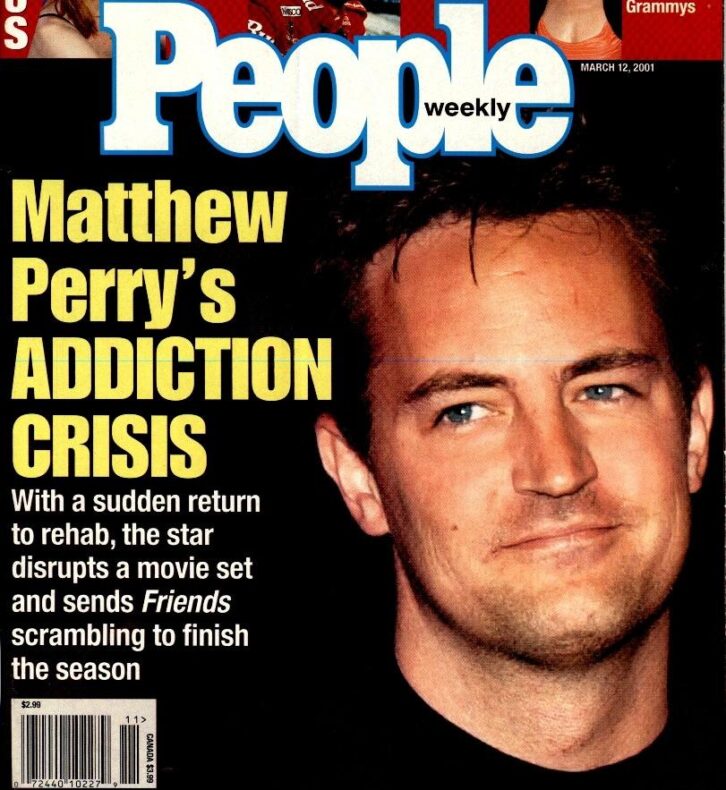
Today I found out Matthew Perry died. Some media outlet was playing a clip where he was saying how important it is to help those in need, particularly those looking to get sober. That hit a nerve and I decided to break a personal rule, and AA rule, and his confidence.

I met Matthew Perry at one of the worst times of his life. He was in Dallas filming (I think) Serving Sara. I say I think because that movie was released in 2002 but I would have sworn it was the late 90s. In any case, at the time some tabloids and newspapers very publicly exposed that he had been going to strip clubs, acting erratically, and was somewhat out of control. Then that he went to rehab. Then he showed up that the AA meeting I went to. I remember how sympathetic I was to the publicity surrounding such a difficult time. I was furious with my own family for disclosing that I had gone to rehab and then AA but I could not imagine having the level of public scrutiny he was experiencing or the possible shame that might have caused.

I wanted to hug the guy. I didn’t. Partially because he had a body guard and partially I thought how hard it must be to be so famous that you would questions someones motives for being nice to you. I worried if I tried to be kind to him, maybe I would only be doing it because I had been such a huge fan of Friends. Or he would think I was only being kind to him because of Friends. So I broke my other rule: to always pay it forward to the next guy.

When I got sober, I was uncomfortable in my own skin. I couldn’t sit still. I couldn’t share in meetings. When meetings were over, I bee lined it for the door. I wanted desperately to have sober friends, but I couldn’t bring myself to ask for help. One day while walking towards to door immediately following the meeting, the guy that had taken me to lunch and bought me a Big Book cornered me (literally) and said, “What? You too cool for us? What show are you running off to watch at home alone? Why don’t you get dinner with us? Why don’t you come and hang out with us?” The irony. I was too proud to ask to hang out. So he forced me. And I never needed that so much in my life as I did in that moment.

I wish I had corned Matthew Perry. I wish I told him “I get it”. I wish I asked him to dinner with us, to hang out with us. Then later I wished so much to tell him I was sorry I didn’t extend my hand and pay it forward. I hated to see him struggle. Not that my ego is so unchecked as to think I would have been the one to make a difference, but that I hate that out of fear, I said nothing to him. And I am guessing many did not extend a hand for the same reason. I hate that. I hope to God I never do that again.

He was not the only famous person I met in AA. Another, who I will not name, became relatively good friends. I wish I could say that made me feel better. It makes me certain that when the hand is extended or the door opened, few on pass that opportunity.

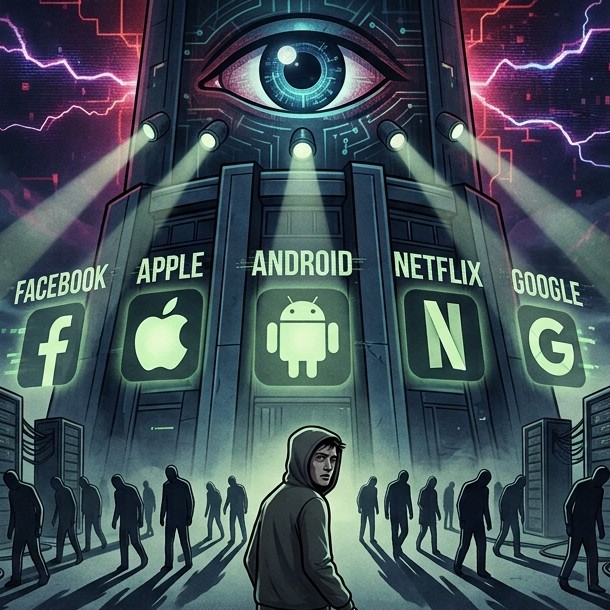
How many times have I heard, “I have a love hate relationship with Facebook”?  Facebook, Twitter, Instagram, YouTube… let’s just call them Social Media Platforms or SMPs.  The ability to keep in touch with friends and family, share with a large group of people quickly, share and manage photos, find details about that friend from way back; all of that is great.  Lately the list of bad is growing long and the great seems less so.  The problem is the bad is worse than most people think.  Suicides.  Political manipulation.  Extremely effective and manipulative advertising.  Spying.  Social engineering.  The libertarian in me thinks they should be free to do that and I should be as free to not use it.  Yet I feel more and more that SMPs are becoming a utility that everyone needs in the way everyone needs a phone and credit card.  Technically you don’t need it, but it is pretty hard to be in this society without it.  A friend the other day cryptically hinted that he may be developing some SMP of his own.  Great!  But he is certainly not the first I have heard speak of such a thing.  SInce the now defunct Friendster launched in 2002 and Facebook IPO’d for hundreds of billions, people have been trying to break into the SMP market.  Arguably only 3 have made it.  Google, Facebook, and Twitter.  Facebook, Apple, Amazon, Netflix, and Google or FAANG are just 5 companies with a combined value of $6 trillion dollars.  They have been insanely good at protecting that club and barring any new members.  Those that have come close have been gobbled up acquisition style.  Or destroyed.  This is a problem I have thought a lot about and I think I have devised a way to disrupt the disruptors.

Microblogging and the Content Shift

What is micro-blogging?  Microblogging is a term getting thrown around a bit and Twitter adopted it as their own.  The idea of microblogging seemed stupid to me at first.  Why limitations when my blog has no limits?  And why put my content on someone elses site when I have my own?  At first with many SMPs, content creators were using them just to tease their content to attract content to their own site.  This worked great.  In fact, many SMPs had APIs and allowed for 3rd party applications that would automatically post links to blog articles on SMPs as soon as you published a blog article.  Facebook disallowed this to some degree and made this difficult to do.  Which lead to two interesting developments: content started being posted on SMPs and Facebook started controlling what content their users saw.

Protect The Feed At All Costs

I can remember watch Apple keynotes to see new features being released, back when new features improved the user experience.  With SMPs, most new features are frustrating and unwanted by users and exist only to aid SMPs.  The first example was Facebook changing the default sort from chronological to using a blackbox algorithm.  It sounded great.  Many complained they were no longer seeing content from people like they would want.  At first you could change the sort back to chronological, then you could change it but the change would not persist between visits, then you couldn’t change the sort if you wanted to.  You have no control over the way content in your feed is ranked.  Facebook’s strategy: protect the feed at all cost.  You can’t even see the magic algorithm that controls the content you see.  Politicians have claimed they are being censored.  It is worse than that.  People can say whatever they want, but there is no guarantee anyone will see it.  Even if they want to see it.  Protect the feed at all cost.  Once they had that control, why would they give it up?  This is clearly demonstrable by looking at traffic from articles posted on Facebook.  Where they may have gotten tens of thousands at one time, now they are lucky to get ten.  SMPs have a few high priority goals: 1.  Content should be on our site, not the content creators’ sites.  2.  We want people on our site, not here just to find content that leads them away.  3.  We want to control the public dialog and if we don’t like what is being said, we can set the algorithm to bury it in obscurity.

Really Simple Syndication

Really Simple Syndication or RSS was a technology cut short by SMPs.  There were a few apps like Flipboard that used RSS feeds.  Basically RSS let you subscribe to a blog.  Maybe you wanted to follow a large number of blog sites, but going to each of those looking for new content was a bit daunting.  Enter feed readers or feed aggregators.  Feed readers like Flipboard let you subscribe to blogs and then it would curate articles right there in your feed reader.  It was great!  You could set up categories.  Maybe you followed a few movie bloggers so you’d set up a feed of movie blogs.  Another for political blogs.  When you opened the app it would go out and grab content and create this page like the Wall Street Journal.  Little teasers of content.  If you wanted to read more, you could click a link to go to the blog page.

Decentralization

Bitcoin ushered in a really interesting idea.  Digital currency?  No.  Decentralization.  When the military first developed the internet, the primary goal was decentralized information.  It protected the military from the unlikely event that the Pentagon or some other location would be bombed.  We haven’t really seen many other applications use this idea other than digital currency.

A Blueprint for A Social Media Killer

I think to kill social media in its current state, one must disrupt that technology with a compelling alternative.  I would suggest a site that uses RSS or a similar technology to gather information from blogs and aggregate them on a site.  Not to steal the entire blog post, mind you, just the title and main image: just a teaser.  The flaw of RSS readers is they were not a site and you had to go through the laborious task of finding blogs.  Instead the site should just aggregate all blog content and let users sift through to find things that are interesting and like them similar to Reddit, just without the need for someone to post the content.  The content would in effect be decentralized as it would not exist on the social media platform but on the content creators site, the aggregator would just be a discovery gateway.

My Grandfather, who was a farmer until his sons went to college and then built homes, told me that a financial investor once said to him, “don’t work for your money, make your money work for you.” My grandfather started investing and when he passed away, he was a millionaire.

I have become a fan of Dave Ramsey and recently took his course Financial Peace University. He has what he calls “Baby Steps”, the fundamentals which are:

  1. Save $1,000
  2. Pay off ALL debt
  3. Build an Emergency Fund with at least 3 months of expenses (and eventually a year or more)
  4. Invest 15% of your household income
  5. Save for your children’s college fund
  6. Pay off your home early
  7. Build wealth and GIVE

The thing is…I knew this! I had been told the wisdom of this myself and I am mad at myself for robbing me of what I could have had for what I wanted right then. Don’t rob yourself like I did. Invest in yourself and in your family instead of squandering your money on food, drink, toys, and trinkets that will only satisfy you for a moment.

I wanted to give a quick primer on some investing concepts. First, what are some investing options? The most common are (from the most risky to the most conservative:

  • Mutual Funds
  • Publicly Traded Stocks & Bonds
  • Private Businesses
There are obviously more, but to keep this short, I will start with these. The most risky is a private business. I think investing in private business is great and have invested my own money in my own business, but I would only do that now with a small portion of my total investments. No more than 20%.

Public Companies issue shares of stock during their Initial Public Offering. You can multiply the number of shares of stock times the currently stock price to get what is called a Market Cap or what the company is worth. For example, Dallas based oil company Exxon Mobile has 4.22 billion shares that are each worth $32.40 making the market cap $136.8 billion. You can buy one share of Exxon for $32.40, which would make you a shareholder or essentially an owner or a very small portion of that company.

How do you make money from stock?

There are two ways. First, public companies’ goal is to make a profit. They take this profit or earnings and divide it buy the number of shares and that is the Earning Per Share or Dividend. Exxon paid 4 quarterly dividends in 2020 of $0.87 each. So if you bought a share for $32.40, you would have made $3.48 or almost 11%. Second, you make money when you sell the share. As the company grows, the stock price should increase. So if you buy the share for $32.40, you are expecting it to be higher when you sell it.

How much money do you make from stock?

The best way to answer this is to explain Mutual Funds. The best investment strategy is to invest in several stocks. There are companies that do this and these are called funds. Mutual Funds typically invest in stock and usually invest with some type. There might be funds that focus on large companies or Large Cap or Large Market Capital (we talked about market cap above as being the number of shares times the stock price). Another fund might invest in different retail stores. Another health care. And so on. Usually they focus on an industry, business size, or region. Some funds are what they call index funds. Index funds invest in pretty much everything. One example is the S&P 500. This is an index fund of 500 different companies and is used as a benchmark. The S&P 500 average return for the last 100 years is about 11%.

So what is that worth over time?

Let’s say you invest 15% (as Dave Ramsey suggests) and you make $50,000 a year paid monthly. That is $7,500 a year or $625 a month. If you did that from age 25 to 65, you would retire with $5.37 million! Keep in mind, you have only paid $625 a month, $7,500 a year, or a total of $300,000, but you end up with almost 20 times that much! If you just invested $100 a month but made a return of 17% instead of 11%, you would have $6 million. In short, being disciplined and investing each month and getting a good return on your investment is what leads to building real wealth.

How do I get started?

First, open a brokerage account. There are several, but I personally use Vangaurd and TD Ameritrade. Once you open an account, you need to make a trade to trade your money for stock. You can set this up automatically and I would recommend putting more than half your investments in a mutual fund. Maybe all of it. You should have your paycheck automatically deposited into your bank and if you do that you can set up an automatically transfer to your brokerage. I get paid every other week and my tythe to my church and my transfer to my brokerage account happen immediately.

1 2 3 13